
Permanent hair removal in Chilliwack, BC
Say goodbye to unwanted hair. For life.
Say goodbye to unwanted hair. For life.
At Allard Studio, we permanently remove unwanted hair for all hair and skin types using Electrolysis, the only FDA-approved method for permanent hair removal.
At Allard Studio, we permanently remove unwanted hair for all hair and skin types using Electrolysis, the only FDA-approved method for permanent hair removal.
25+ Years Experience
Registered Electrologist
Registered Electrologist
30k+ Treatments
30k+ Treatments
FDA
Approved
FDA
Approved
Certified Professional Electrologist
Tired of hair that keeps coming back? Finally stop shaving, waxing and tweezing. For good.
Tired of hair that keeps coming back? Finally stop shaving, waxing and tweezing. For good.




finally get permanent results
Hair removal for:
Any Skin Type
Every Hair Colour
Safe & Effective
Allard Studio provides tailored treatment plans, designed specifically for you. We can help with removal of facial hair, hormonal hair growth, and gender-affirming care, or simply help you ditch your razor, for good.
Allard Studio provides tailored treatment plans, designed specifically for you. We can help with removal of facial hair, hormonal hair growth, and gender-affirming care, or simply help you ditch your razor,
for good.
Love your smooth skin
Feel like yourself
Boost your confidence
Serving Chilliwack & the Fraser Valley, BC
Permanent hair removal for every stage of life
If you’re managing hormonal hair growth, preparing for gender-affirming surgery, or simply ready to stop tweezing, waxing, or shaving for good. We’re here to help.
01
Facial Hair Removal
Permanent treatment for unwanted hair on the face, including the upper lip, chin, cheeks, neck, and brows.
02
Body Hair Removal
Enjoy permanent hair removal for the arms, legs, chest, back, abdomen, hands, feet, and other body areas.
03
Underarm Hair Removal
Achieve smooth, maintenance-free underarms with permanent hair removal designed for long-time results.
04
Bikini & Intimate Areas
Professionally performed electrolysis safely and permanently eliminates unwanted hair from the breasts, bikini, and other sensitive areas.

Enjoy smooth, hair-free skin
Boost your confidence
No more maintainence
Enjoy smooth, hair-free skin
Boost your confidence
No more maintainence
05
PCOS & Hormonal Hair Removal
Permanent hair removal for unwanted facial and body hair caused by PCOS, menopause, and other hormonal changes.
06
Trans Care BC Approved Provider
Trans Care BC Approved Provider
Gender-Affirming Care
Compassionate, personalised permanent hair removal for facial feminization, surgical preparation, and gender-affirming care.
07
Men’s Grooming
Permanent hair removal for beard scaping, brows, neckline, ears, nose, chest, back, and other grooming needs.
08
Teen Hair Removal
Safe, professional permanent hair removal for facial hair, eyebrows, and other unwanted hair during the teenage years.
Achieve beautiful, smooth, hair-free skin
It’s easy to get started
It’s easy to get started
Whatever brings you to Allard Studio, you’ll receive honest advice, personalised care, and a treatment plan designed around your goals.
Whatever brings you to Allard Studio, you’ll receive honest advice, personalised care, and a treatment plan designed around your goals.
Book a Free Consultation
01
01
Meet with Melody, ask questions, and receive a complimentary sample treatment.
Start Your Treatment Plan
02
02
Receive a personalised treatment plan designed around your hair growth and goals.
Enjoy Permanent Hair Removal
03
03
Watch unwanted hair disappear permanently and enjoy smooth, skin with confidence that lasts.
Why is electrolysis the best approach?
Why is electrolysis the best approach?
Unlike lasers and other treatments, Electrolysis targets individual follicles using precisely placed electrical energy to destroy the germinative cells responsible for hair growth. When treated successfully, the follicle is permanently disabled from ever producing another hair thus making your hair removal truly permanent for life. Electrolysis is the only method recognised by the FDA as permanent hair removal.
Unlike lasers and other treatments, Electrolysis targets individual follicles using precisely placed electrical energy to destroy the germinative cells responsible for hair growth. When treated successfully, the follicle is permanently disabled from ever producing another hair thus making your hair removal truly permanent for life. Electrolysis is the only method recognised by the FDA as permanent hair removal.
Laser Hair Removal
Hair reduction not removal
Hair reduction not removal
Only effective on coarse/dark hair
Only effective on coarse/dark hair
Safety depends on hair/skin type
Safety depends on hair/skin type
Large treatment areas
Needs regular touch-ups
Not recognised by the FDA
Not recognised by the FDA
electrolysis
Truly permanent hair removal
Truly permanent hair removal
Effective on any hair color & type
Effective on any hair color & type
Safe for all skin tones
Targets individual follicles
No maintenance
Recognised by the FDA
Recognised by the FDA
Serving Chilliwack & the Fraser Valley, BC
Helping people feel like themselves again
Helping people feel like themselves again
30,000+
Treatments completed
Treatments completed


MICHELLE TOUPIN
|
CHILLIWACK
Melody makes every appointment comfortable and welcoming. She’s incredibly fast, experienced, and professional, and you can tell she truly knows what she’s doing. Great service and great results.
NUZZY KHAN
|
CHILLIWACK
Melody has been life-changing for my PCOS-related facial hair. My face and neck are now almost completely hair-free, and the results have given me so much confidence.
JANAE DUECK
|
CHILLIWACK
After trying everything, including more than 20 laser sessions, electrolysis with Melody finally worked. The results have been amazing, and she makes every appointment enjoyable.
LARA VANDEBEEK
|
CHILLIWACK
Melody’s work has helped me regain my confidence after years of struggling with unwanted hair. Her studio is clean, welcoming, and immediately puts you at ease.
MARY-ANN SPRENGER
|
CHILLIWACK
Melody’s gentle touch, calming voice, and kindness make electrolysis surprisingly comfortable. I’m so grateful I found her and would highly recommend Allard Studio.
LISA FINN
|
CHILLIWACK
A friendly atmosphere and clean, professional service. I was nervous my first time, but Melody explained everything and made me feel completely safe.
MARG BARTEL
|
CHILLIWACK
Quiet, private, and professional. Melody is thorough, detailed, punctual, and willing to work with your individual needs.
CORA ZALOT
|
CHILLIWACK
Switching to Melody completely changed my electrolysis experience. She is thorough, never rushes treatments, and makes the process surprisingly comfortable. I only wish I had found her sooner.
KRISTI K
|
CHILLIWACK
I’ve trusted Melody for years and wouldn’t go anywhere else. She’s incredibly skilled, professional, and caring, and she always makes every appointment comfortable and positive.
JEN VAN HOUTEN
|
CHILLIWACK
Melody is an exceptional technician who explains everything clearly and makes you feel completely at ease. I’m already seeing great results and highly recommend her.
BARH RHODES
|
CHILLIWACK
I’ve been seeing Melody for over 20 years. She is professional, ethical, and highly skilled, and she remains my go-to person whenever unwanted hairs appear.
KORRALIN SKYE
|
CHILLIWACK
Melody is fast, efficient, and honest about what treatment will work best for you. She makes sure your time is well spent and delivers incredible results.
JENNIFER CRICHTON
|
CHILLIWACK
She is the QUEEN of electrolysis, professional, intelligent, and highly skilled at her trade. I saw Melody for almost 3 years and over time, I needed to see her less and less because my hair did not grow back.
ANDREW SNOW
|
CHILLIWACK
Ear hair gone! I should have done this sooner.
CINDY DIXSON
|
CHILLIWACK
Melody is the best. My long-term results have been fantastic, from permanent hair removal to beautifully shaped eyebrows.
CHELLE Y
|
CHILLIWACK
Melody’s results have lasted for decades. She works quickly and effectively while remaining friendly and professional, and the permanent results have been completely worth the investment.
about
Meet Melody RE, CPE, CCE
Meet Melody RE, CPE, CCE
about
For more than 25+ years, Melody has built her reputation on exceptional results and genuine compassion by every one of her 1,000+ clients. As a Certified Professional Electrologist, she helps people experience the self-confidence that comes with permanent hair removal.
She’s worked to make Allard Studio a welcoming, inclusive space where every client is treated with professionalism, respect, and kindness the moment they walk through the door.
For more than 25+ years, Melody has built her reputation on exceptional results and genuine compassion by every one of her 1,000+ clients. As a Certified Professional Electrologist, she helps people experience the self-confidence that comes with permanent hair removal.
She’s worked to make Allard Studio a welcoming, inclusive space where every client is treated with professionalism, respect, and kindness the moment they walk through the door.


FAQs
If you haven’t had electrolysis treatment before, this information might be useful to you. If you still want to learn more, you can call the studio and we’ll be happy to answer any questions you have.
How long does it take to get rid of unwanted hair with electrolysis?
Most treatment plans run 18–24 months, though the exact timeline depends on your hair growth cycle, density, and history with other hair removal methods. Heredity, hormones, medication, and stress can all influence how hair grows, which is why I don't offer a one-size-fits-all timeline, I build a plan around your specific situation. Appointments typically start weekly or every 3–4 weeks, then space out to every 4–6 weeks as treated follicles stop producing hair for good. A consultation is really the only accurate way to know what your plan will look like, and every client leaves with one built specifically for their goals.
Does electrolysis really work?
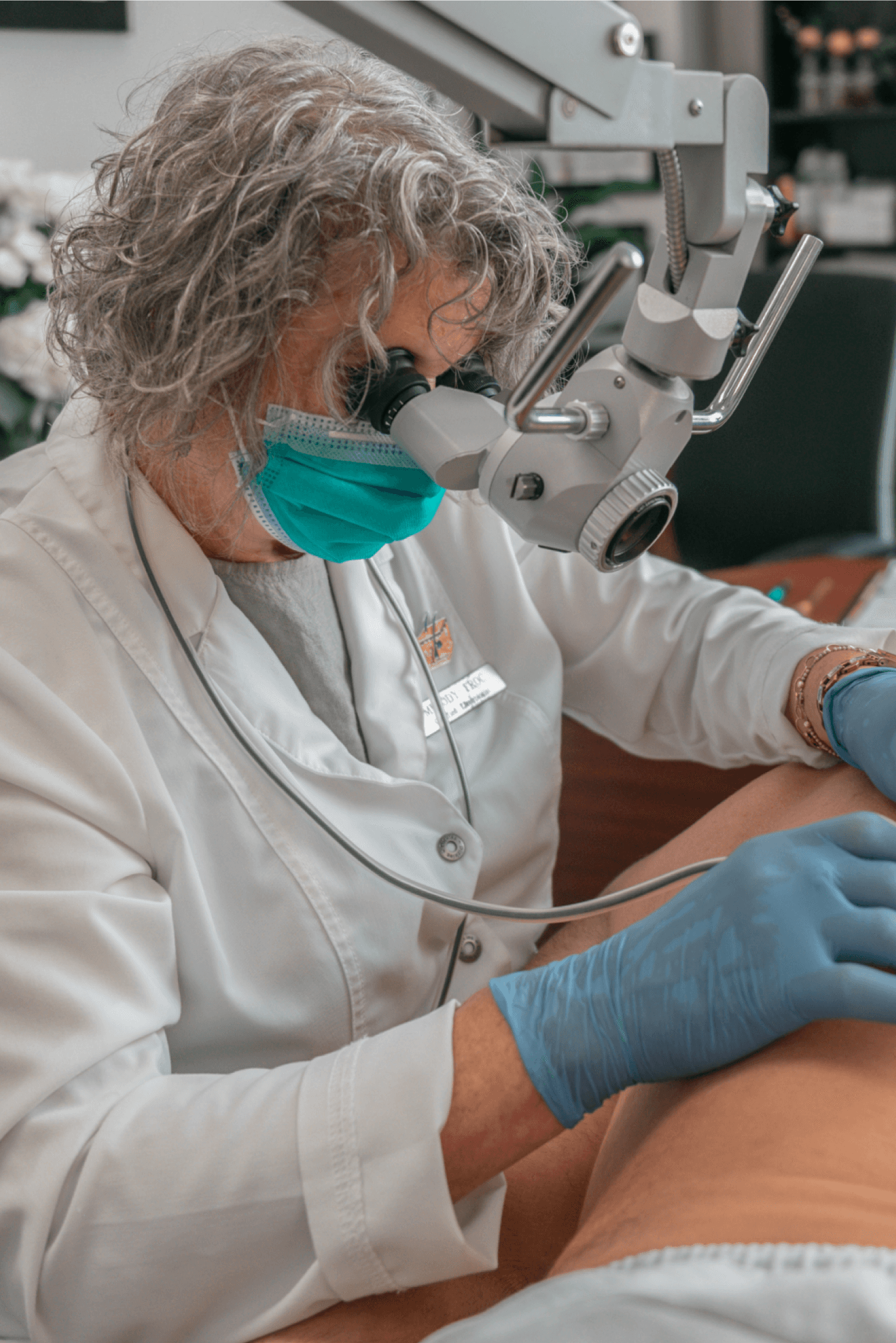
Yes, when it's done correctly and the full treatment plan is completed, electrolysis destroys the hair follicle permanently, every time, without fail. When people feel like it "didn't work" for them, it almost always comes down to a few things: the plan wasn't finished, appointments were spaced too far apart, hair was tweezed between sessions, or the electrologist simply wasn't skilled enough. Electrolysis is a precision, skill-based treatment, I insert a tiny probe into each follicle individually and apply the correct current to disable it, which is why training and experience matter as much as your commitment to the plan. I use a surgical microscope during treatment so I can target the follicle accurately without unnecessary contact with the surrounding skin, which means more effective treatment, better comfort, and a shorter path to lasting results. Successful, permanent hair removal is a partnership. I bring the skill, and you bring the consistency.
Is electrolysis really worth it?
Yes, electrolysis is the only hair removal method that permanently destroys the follicle, which means the hair genuinely cannot grow back. It works on every hair colour and skin tone, including grey, white, light blonde, and red hair that laser simply can't treat, and it's safe on areas laser can't touch, like tattooed skin, brows, and darker or tanned skin. Temporary methods like shaving, waxing, threading, and tweezing only interrupt the hair growth cycle rather than ending it, and over time they can actually thicken the hair or lead to ingrown and embedded hairs. Electrolysis takes a real time commitment usually several months to a couple of years, since each follicle is treated individually but it's the only path to completely hair-free, smooth skin with no ongoing touch-ups required. Over a lifetime, that also means real savings on the razors, wax, and creams you'd otherwise keep buying forever.
Why can I shave but not tweeze, wax, thread, or epilate once I begin electrolysis treatments?
Because tweezing, waxing, and threading actually work against the progress we're making. Electrolysis works by gradually shrinking the blood supply to each treated hair, but when you pluck a hair out by the root, your body reads that as an injury and rushes more blood to the area to heal it and more blood supply means a stronger hair. That can undo progress and add extra treatments to your plan. Shaving, on the other hand, only removes hair at the skin's surface without disturbing the follicle, so it's completely safe to use between appointments. And to bust a common myth: shaving doesn't make hair grow back thicker or darker, research going back to 1928 has confirmed this repeatedly. The stubbly feeling after shaving is just the blunt-cut tip growing out, not a change in the hair itself. Clients who've relied on shaving between appointments consistently finish their treatment plans faster than those who've been tweezing or waxing.
How do I prepare for my electrolysis appointment?
A little preparation goes a long way toward a smoother, more comfortable session. Come in well hydrated — drink plenty of water beforehand, and if you've had coffee, balance it with about two glasses of water per cup, since well-hydrated follicles are easier to treat. Gently exfoliate before your appointment so built-up oils and dead skin don't clog the follicle and make insertions harder. If you're being treated somewhere like your underarms or bikini line, trim or shave about 3–4 days ahead so the hair is just long enough to grasp after treatment; for a hair removal consultation, though, I'll need 2–3 days of growth to properly assess the area, so please don't tweeze or pull hair beforehand. Arrive with clean skin, since freshly cleansed skin keeps treatment more comfortable and hygienic. If you're using a numbing cream, apply it well in advance following the product instructions — last-minute application won't give it time to work. And try to avoid heavy sweating right after your session, since freshly treated follicles are more open and sweat can introduce bacteria, so plan any workouts for before your appointment or the next day instead.
How should I care for my skin after treatment?
Aftercare matters just as much as the treatment itself, especially in the first 48 hours while your skin settles and the treated follicles close back up. Try not to touch, pick, or scratch the treated area, since hands carry bacteria that can cause irritation or infection. Skip harsh skincare products anything with fragrance, alcohol, exfoliating grit, or retinoids on the area for a few days, and avoid makeup on treated facial areas for at least 24 hours. A mild astringent like witch hazel or some aloe vera will help keep the area hydrated and support healing, and it's worth protecting the area from direct sun with SPF 30 or higher for the first few days. Hold off on strenuous exercise or saunas, since sweat introduces bacteria that can lead to pimples in freshly treated follicles. If irritation is still noticeable on day two, a 1% hydrocortisone cream can calm redness and swelling, and a cool compress right after treatment helps too. It's also common for small white pustules to appear leave them alone rather than picking, and a warm Epsom salt compress the evening of and morning after treatment will help them heal faster.
What should I expect after my electrolysis treatment?
Small pimples can show up too, especially for clients with oilier skin. Bruising is rare, it isn't something most clients experience but on the odd occasion a small bruise can appear if a follicle was pierced or if you're on blood thinners. When it does happen, it usually resolves within 7–10 days, and it's worth mentioning to me so I can adjust your treatment.
Can electrolysis permanently treat ingrown and embedded hairs?
Yes, because electrolysis disables the follicle itself rather than just removing the hair, it stops ingrown and embedded hairs from coming back in that same spot. An ingrown hair keeps reappearing in the same place because the follicle producing it is still active; until that follicle is permanently disabled, the same problem will keep resurfacing no matter how many times the hair is extracted. Since electrolysis doesn't rely on light absorption into skin pigment the way laser does, it also doesn't carry the same risk of further discolouration on skin that's already irritated. I can often treat an embedded hair even while it's active or inflamed, though sometimes I'll recommend letting an actively inflamed area calm down first so treatment stays comfortable and effective. And while carefully trimming or shaving the area (rather than pulling the hair out) can ease irritation in the meantime, it doesn't resolve the underlying cause only permanently disabling the follicle does that. Existing marks often fade on their own once the skin isn't being repeatedly irritated.
Does electrolysis hurt?
Electrolysis can feel uncomfortable at times, but most clients find it completely manageable, especially with an experienced electrologist pain tolerance varies a lot from person to person, and some clients even fall asleep during treatment. If you'd like some extra comfort, listening to music or a podcast is a simple, effective distraction for a lot of people. Over-the-counter pain relievers like Advil or Tylenol taken 20–30 minutes before your appointment can help take the edge off, and some clients prefer to discuss prescription options with their doctor. I also offer a 5% lidocaine topical numbing cream, Zenza, available for purchase at my office, which can be applied ahead of your appointment following the manufacturer's directions.
Can electrolysis treat trichiasis (ingrown or turned-in eyelashes)?
Yes, electrolysis has been used to permanently treat trichiasis since 1875, and it remains one of the only ways to truly resolve it rather than just manage it. Trichiasis, or ingrown and turned-in eyelashes, can be caused by excessive eye rubbing, genetics, certain medications like glaucoma eye drops, or simply the loss of skin elasticity that comes with age. Left untreated, it can lead to serious eye infections and even irreversible damage to the surface of the eye. Tweezing the lash brings only temporary relief and can distort the follicle over time, leading to embedded lashes and irritation to nearby lashes and skin. Electrolysis destroys the germinative cells responsible for producing that lash, so the follicle can never grow one again. I'm fortunate to provide this treatment in partnership with a local ophthalmologist, bringing my equipment to his office to treat his patients' ingrown and turned-in eyelashes under his supervision and ongoing care.
FAQs
If you haven’t had electrolysis treatment before, this information might be useful to you. If you still want to learn more, you can call the studio and we’ll be happy to answer any questions you have.
How long does it take to get rid of unwanted hair with electrolysis?
Most treatment plans run 18–24 months, though the exact timeline depends on your hair growth cycle, density, and history with other hair removal methods. Heredity, hormones, medication, and stress can all influence how hair grows, which is why I don't offer a one-size-fits-all timeline, I build a plan around your specific situation. Appointments typically start weekly or every 3–4 weeks, then space out to every 4–6 weeks as treated follicles stop producing hair for good. A consultation is really the only accurate way to know what your plan will look like, and every client leaves with one built specifically for their goals.
Does electrolysis really work?
Yes, when it's done correctly and the full treatment plan is completed, electrolysis destroys the hair follicle permanently, every time, without fail. When people feel like it "didn't work" for them, it almost always comes down to a few things: the plan wasn't finished, appointments were spaced too far apart, hair was tweezed between sessions, or the electrologist simply wasn't skilled enough. Electrolysis is a precision, skill-based treatment, I insert a tiny probe into each follicle individually and apply the correct current to disable it, which is why training and experience matter as much as your commitment to the plan. I use a surgical microscope during treatment so I can target the follicle accurately without unnecessary contact with the surrounding skin, which means more effective treatment, better comfort, and a shorter path to lasting results. Successful, permanent hair removal is a partnership. I bring the skill, and you bring the consistency.
Is electrolysis really worth it?
Yes, electrolysis is the only hair removal method that permanently destroys the follicle, which means the hair genuinely cannot grow back. It works on every hair colour and skin tone, including grey, white, light blonde, and red hair that laser simply can't treat, and it's safe on areas laser can't touch, like tattooed skin, brows, and darker or tanned skin. Temporary methods like shaving, waxing, threading, and tweezing only interrupt the hair growth cycle rather than ending it, and over time they can actually thicken the hair or lead to ingrown and embedded hairs. Electrolysis takes a real time commitment usually several months to a couple of years, since each follicle is treated individually but it's the only path to completely hair-free, smooth skin with no ongoing touch-ups required. Over a lifetime, that also means real savings on the razors, wax, and creams you'd otherwise keep buying forever.
Why can I shave but not tweeze, wax, thread, or epilate once I begin electrolysis treatments?
Because tweezing, waxing, and threading actually work against the progress we're making. Electrolysis works by gradually shrinking the blood supply to each treated hair, but when you pluck a hair out by the root, your body reads that as an injury and rushes more blood to the area to heal it and more blood supply means a stronger hair. That can undo progress and add extra treatments to your plan. Shaving, on the other hand, only removes hair at the skin's surface without disturbing the follicle, so it's completely safe to use between appointments. And to bust a common myth: shaving doesn't make hair grow back thicker or darker, research going back to 1928 has confirmed this repeatedly. The stubbly feeling after shaving is just the blunt-cut tip growing out, not a change in the hair itself. Clients who've relied on shaving between appointments consistently finish their treatment plans faster than those who've been tweezing or waxing.
How do I prepare for my electrolysis appointment?
A little preparation goes a long way toward a smoother, more comfortable session. Come in well hydrated — drink plenty of water beforehand, and if you've had coffee, balance it with about two glasses of water per cup, since well-hydrated follicles are easier to treat. Gently exfoliate before your appointment so built-up oils and dead skin don't clog the follicle and make insertions harder. If you're being treated somewhere like your underarms or bikini line, trim or shave about 3–4 days ahead so the hair is just long enough to grasp after treatment; for a hair removal consultation, though, I'll need 2–3 days of growth to properly assess the area, so please don't tweeze or pull hair beforehand. Arrive with clean skin, since freshly cleansed skin keeps treatment more comfortable and hygienic. If you're using a numbing cream, apply it well in advance following the product instructions — last-minute application won't give it time to work. And try to avoid heavy sweating right after your session, since freshly treated follicles are more open and sweat can introduce bacteria, so plan any workouts for before your appointment or the next day instead.
How should I care for my skin after treatment?
Aftercare matters just as much as the treatment itself, especially in the first 48 hours while your skin settles and the treated follicles close back up. Try not to touch, pick, or scratch the treated area, since hands carry bacteria that can cause irritation or infection. Skip harsh skincare products anything with fragrance, alcohol, exfoliating grit, or retinoids on the area for a few days, and avoid makeup on treated facial areas for at least 24 hours. A mild astringent like witch hazel or some aloe vera will help keep the area hydrated and support healing, and it's worth protecting the area from direct sun with SPF 30 or higher for the first few days. Hold off on strenuous exercise or saunas, since sweat introduces bacteria that can lead to pimples in freshly treated follicles. If irritation is still noticeable on day two, a 1% hydrocortisone cream can calm redness and swelling, and a cool compress right after treatment helps too. It's also common for small white pustules to appear leave them alone rather than picking, and a warm Epsom salt compress the evening of and morning after treatment will help them heal faster.
What should I expect after my electrolysis treatment?
Small pimples can show up too, especially for clients with oilier skin. Bruising is rare, it isn't something most clients experience but on the odd occasion a small bruise can appear if a follicle was pierced or if you're on blood thinners. When it does happen, it usually resolves within 7–10 days, and it's worth mentioning to me so I can adjust your treatment.
Can electrolysis permanently treat ingrown and embedded hairs?
Yes, because electrolysis disables the follicle itself rather than just removing the hair, it stops ingrown and embedded hairs from coming back in that same spot. An ingrown hair keeps reappearing in the same place because the follicle producing it is still active; until that follicle is permanently disabled, the same problem will keep resurfacing no matter how many times the hair is extracted. Since electrolysis doesn't rely on light absorption into skin pigment the way laser does, it also doesn't carry the same risk of further discolouration on skin that's already irritated. I can often treat an embedded hair even while it's active or inflamed, though sometimes I'll recommend letting an actively inflamed area calm down first so treatment stays comfortable and effective. And while carefully trimming or shaving the area (rather than pulling the hair out) can ease irritation in the meantime, it doesn't resolve the underlying cause only permanently disabling the follicle does that. Existing marks often fade on their own once the skin isn't being repeatedly irritated.
Does electrolysis hurt?
Electrolysis can feel uncomfortable at times, but most clients find it completely manageable, especially with an experienced electrologist pain tolerance varies a lot from person to person, and some clients even fall asleep during treatment. If you'd like some extra comfort, listening to music or a podcast is a simple, effective distraction for a lot of people. Over-the-counter pain relievers like Advil or Tylenol taken 20–30 minutes before your appointment can help take the edge off, and some clients prefer to discuss prescription options with their doctor. I also offer a 5% lidocaine topical numbing cream, Zenza, available for purchase at my office, which can be applied ahead of your appointment following the manufacturer's directions.
Can electrolysis treat trichiasis (ingrown or turned-in eyelashes)?
Yes, electrolysis has been used to permanently treat trichiasis since 1875, and it remains one of the only ways to truly resolve it rather than just manage it. Trichiasis, or ingrown and turned-in eyelashes, can be caused by excessive eye rubbing, genetics, certain medications like glaucoma eye drops, or simply the loss of skin elasticity that comes with age. Left untreated, it can lead to serious eye infections and even irreversible damage to the surface of the eye. Tweezing the lash brings only temporary relief and can distort the follicle over time, leading to embedded lashes and irritation to nearby lashes and skin. Electrolysis destroys the germinative cells responsible for producing that lash, so the follicle can never grow one again. I'm fortunate to provide this treatment in partnership with a local ophthalmologist, bringing my equipment to his office to treat his patients' ingrown and turned-in eyelashes under his supervision and ongoing care.
FAQs
If you haven’t had electrolysis treatment before, this information might be useful to you. If you still want to learn more, you can call the studio and we’ll be happy to answer any questions you have.
How long does it take to get rid of unwanted hair with electrolysis?
Most treatment plans run 18–24 months, though the exact timeline depends on your hair growth cycle, density, and history with other hair removal methods. Heredity, hormones, medication, and stress can all influence how hair grows, which is why I don't offer a one-size-fits-all timeline, I build a plan around your specific situation. Appointments typically start weekly or every 3–4 weeks, then space out to every 4–6 weeks as treated follicles stop producing hair for good. A consultation is really the only accurate way to know what your plan will look like, and every client leaves with one built specifically for their goals.
Does electrolysis really work?
Yes, when it's done correctly and the full treatment plan is completed, electrolysis destroys the hair follicle permanently, every time, without fail. When people feel like it "didn't work" for them, it almost always comes down to a few things: the plan wasn't finished, appointments were spaced too far apart, hair was tweezed between sessions, or the electrologist simply wasn't skilled enough. Electrolysis is a precision, skill-based treatment, I insert a tiny probe into each follicle individually and apply the correct current to disable it, which is why training and experience matter as much as your commitment to the plan. I use a surgical microscope during treatment so I can target the follicle accurately without unnecessary contact with the surrounding skin, which means more effective treatment, better comfort, and a shorter path to lasting results. Successful, permanent hair removal is a partnership. I bring the skill, and you bring the consistency.
Is electrolysis really worth it?
Yes, electrolysis is the only hair removal method that permanently destroys the follicle, which means the hair genuinely cannot grow back. It works on every hair colour and skin tone, including grey, white, light blonde, and red hair that laser simply can't treat, and it's safe on areas laser can't touch, like tattooed skin, brows, and darker or tanned skin. Temporary methods like shaving, waxing, threading, and tweezing only interrupt the hair growth cycle rather than ending it, and over time they can actually thicken the hair or lead to ingrown and embedded hairs. Electrolysis takes a real time commitment usually several months to a couple of years, since each follicle is treated individually but it's the only path to completely hair-free, smooth skin with no ongoing touch-ups required. Over a lifetime, that also means real savings on the razors, wax, and creams you'd otherwise keep buying forever.
Why can I shave but not tweeze, wax, thread, or epilate once I begin electrolysis treatments?
Because tweezing, waxing, and threading actually work against the progress we're making. Electrolysis works by gradually shrinking the blood supply to each treated hair, but when you pluck a hair out by the root, your body reads that as an injury and rushes more blood to the area to heal it and more blood supply means a stronger hair. That can undo progress and add extra treatments to your plan. Shaving, on the other hand, only removes hair at the skin's surface without disturbing the follicle, so it's completely safe to use between appointments. And to bust a common myth: shaving doesn't make hair grow back thicker or darker, research going back to 1928 has confirmed this repeatedly. The stubbly feeling after shaving is just the blunt-cut tip growing out, not a change in the hair itself. Clients who've relied on shaving between appointments consistently finish their treatment plans faster than those who've been tweezing or waxing.
How do I prepare for my electrolysis appointment?
A little preparation goes a long way toward a smoother, more comfortable session. Come in well hydrated — drink plenty of water beforehand, and if you've had coffee, balance it with about two glasses of water per cup, since well-hydrated follicles are easier to treat. Gently exfoliate before your appointment so built-up oils and dead skin don't clog the follicle and make insertions harder. If you're being treated somewhere like your underarms or bikini line, trim or shave about 3–4 days ahead so the hair is just long enough to grasp after treatment; for a hair removal consultation, though, I'll need 2–3 days of growth to properly assess the area, so please don't tweeze or pull hair beforehand. Arrive with clean skin, since freshly cleansed skin keeps treatment more comfortable and hygienic. If you're using a numbing cream, apply it well in advance following the product instructions — last-minute application won't give it time to work. And try to avoid heavy sweating right after your session, since freshly treated follicles are more open and sweat can introduce bacteria, so plan any workouts for before your appointment or the next day instead.
How should I care for my skin after treatment?
Aftercare matters just as much as the treatment itself, especially in the first 48 hours while your skin settles and the treated follicles close back up. Try not to touch, pick, or scratch the treated area, since hands carry bacteria that can cause irritation or infection. Skip harsh skincare products anything with fragrance, alcohol, exfoliating grit, or retinoids on the area for a few days, and avoid makeup on treated facial areas for at least 24 hours. A mild astringent like witch hazel or some aloe vera will help keep the area hydrated and support healing, and it's worth protecting the area from direct sun with SPF 30 or higher for the first few days. Hold off on strenuous exercise or saunas, since sweat introduces bacteria that can lead to pimples in freshly treated follicles. If irritation is still noticeable on day two, a 1% hydrocortisone cream can calm redness and swelling, and a cool compress right after treatment helps too. It's also common for small white pustules to appear leave them alone rather than picking, and a warm Epsom salt compress the evening of and morning after treatment will help them heal faster.
What should I expect after my electrolysis treatment?
Small pimples can show up too, especially for clients with oilier skin. Bruising is rare, it isn't something most clients experience but on the odd occasion a small bruise can appear if a follicle was pierced or if you're on blood thinners. When it does happen, it usually resolves within 7–10 days, and it's worth mentioning to me so I can adjust your treatment.
Can electrolysis permanently treat ingrown and embedded hairs?
Yes, because electrolysis disables the follicle itself rather than just removing the hair, it stops ingrown and embedded hairs from coming back in that same spot. An ingrown hair keeps reappearing in the same place because the follicle producing it is still active; until that follicle is permanently disabled, the same problem will keep resurfacing no matter how many times the hair is extracted. Since electrolysis doesn't rely on light absorption into skin pigment the way laser does, it also doesn't carry the same risk of further discolouration on skin that's already irritated. I can often treat an embedded hair even while it's active or inflamed, though sometimes I'll recommend letting an actively inflamed area calm down first so treatment stays comfortable and effective. And while carefully trimming or shaving the area (rather than pulling the hair out) can ease irritation in the meantime, it doesn't resolve the underlying cause only permanently disabling the follicle does that. Existing marks often fade on their own once the skin isn't being repeatedly irritated.
Does electrolysis hurt?
Electrolysis can feel uncomfortable at times, but most clients find it completely manageable, especially with an experienced electrologist pain tolerance varies a lot from person to person, and some clients even fall asleep during treatment. If you'd like some extra comfort, listening to music or a podcast is a simple, effective distraction for a lot of people. Over-the-counter pain relievers like Advil or Tylenol taken 20–30 minutes before your appointment can help take the edge off, and some clients prefer to discuss prescription options with their doctor. I also offer a 5% lidocaine topical numbing cream, Zenza, available for purchase at my office, which can be applied ahead of your appointment following the manufacturer's directions.
Can electrolysis treat trichiasis (ingrown or turned-in eyelashes)?
Yes, electrolysis has been used to permanently treat trichiasis since 1875, and it remains one of the only ways to truly resolve it rather than just manage it. Trichiasis, or ingrown and turned-in eyelashes, can be caused by excessive eye rubbing, genetics, certain medications like glaucoma eye drops, or simply the loss of skin elasticity that comes with age. Left untreated, it can lead to serious eye infections and even irreversible damage to the surface of the eye. Tweezing the lash brings only temporary relief and can distort the follicle over time, leading to embedded lashes and irritation to nearby lashes and skin. Electrolysis destroys the germinative cells responsible for producing that lash, so the follicle can never grow one again. I'm fortunate to provide this treatment in partnership with a local ophthalmologist, bringing my equipment to his office to treat his patients' ingrown and turned-in eyelashes under his supervision and ongoing care.
FAQs
If you haven’t had electrolysis treatment before, this information might be useful to you. If you still want to learn more, you can call the studio and we’ll be happy to answer any questions you have.
How long does it take to get rid of unwanted hair with electrolysis?
Most treatment plans run 18–24 months, though the exact timeline depends on your hair growth cycle, density, and history with other hair removal methods. Heredity, hormones, medication, and stress can all influence how hair grows, which is why I don't offer a one-size-fits-all timeline, I build a plan around your specific situation. Appointments typically start weekly or every 3–4 weeks, then space out to every 4–6 weeks as treated follicles stop producing hair for good. A consultation is really the only accurate way to know what your plan will look like, and every client leaves with one built specifically for their goals.
Does electrolysis really work?
Yes, when it's done correctly and the full treatment plan is completed, electrolysis destroys the hair follicle permanently, every time, without fail. When people feel like it "didn't work" for them, it almost always comes down to a few things: the plan wasn't finished, appointments were spaced too far apart, hair was tweezed between sessions, or the electrologist simply wasn't skilled enough. Electrolysis is a precision, skill-based treatment, I insert a tiny probe into each follicle individually and apply the correct current to disable it, which is why training and experience matter as much as your commitment to the plan. I use a surgical microscope during treatment so I can target the follicle accurately without unnecessary contact with the surrounding skin, which means more effective treatment, better comfort, and a shorter path to lasting results. Successful, permanent hair removal is a partnership. I bring the skill, and you bring the consistency.
Is electrolysis really worth it?
Yes, electrolysis is the only hair removal method that permanently destroys the follicle, which means the hair genuinely cannot grow back. It works on every hair colour and skin tone, including grey, white, light blonde, and red hair that laser simply can't treat, and it's safe on areas laser can't touch, like tattooed skin, brows, and darker or tanned skin. Temporary methods like shaving, waxing, threading, and tweezing only interrupt the hair growth cycle rather than ending it, and over time they can actually thicken the hair or lead to ingrown and embedded hairs. Electrolysis takes a real time commitment usually several months to a couple of years, since each follicle is treated individually but it's the only path to completely hair-free, smooth skin with no ongoing touch-ups required. Over a lifetime, that also means real savings on the razors, wax, and creams you'd otherwise keep buying forever.
Why can I shave but not tweeze, wax, thread, or epilate once I begin electrolysis treatments?
Because tweezing, waxing, and threading actually work against the progress we're making. Electrolysis works by gradually shrinking the blood supply to each treated hair, but when you pluck a hair out by the root, your body reads that as an injury and rushes more blood to the area to heal it and more blood supply means a stronger hair. That can undo progress and add extra treatments to your plan. Shaving, on the other hand, only removes hair at the skin's surface without disturbing the follicle, so it's completely safe to use between appointments. And to bust a common myth: shaving doesn't make hair grow back thicker or darker, research going back to 1928 has confirmed this repeatedly. The stubbly feeling after shaving is just the blunt-cut tip growing out, not a change in the hair itself. Clients who've relied on shaving between appointments consistently finish their treatment plans faster than those who've been tweezing or waxing.
How do I prepare for my electrolysis appointment?
A little preparation goes a long way toward a smoother, more comfortable session. Come in well hydrated — drink plenty of water beforehand, and if you've had coffee, balance it with about two glasses of water per cup, since well-hydrated follicles are easier to treat. Gently exfoliate before your appointment so built-up oils and dead skin don't clog the follicle and make insertions harder. If you're being treated somewhere like your underarms or bikini line, trim or shave about 3–4 days ahead so the hair is just long enough to grasp after treatment; for a hair removal consultation, though, I'll need 2–3 days of growth to properly assess the area, so please don't tweeze or pull hair beforehand. Arrive with clean skin, since freshly cleansed skin keeps treatment more comfortable and hygienic. If you're using a numbing cream, apply it well in advance following the product instructions — last-minute application won't give it time to work. And try to avoid heavy sweating right after your session, since freshly treated follicles are more open and sweat can introduce bacteria, so plan any workouts for before your appointment or the next day instead.
How should I care for my skin after treatment?
Aftercare matters just as much as the treatment itself, especially in the first 48 hours while your skin settles and the treated follicles close back up. Try not to touch, pick, or scratch the treated area, since hands carry bacteria that can cause irritation or infection. Skip harsh skincare products anything with fragrance, alcohol, exfoliating grit, or retinoids on the area for a few days, and avoid makeup on treated facial areas for at least 24 hours. A mild astringent like witch hazel or some aloe vera will help keep the area hydrated and support healing, and it's worth protecting the area from direct sun with SPF 30 or higher for the first few days. Hold off on strenuous exercise or saunas, since sweat introduces bacteria that can lead to pimples in freshly treated follicles. If irritation is still noticeable on day two, a 1% hydrocortisone cream can calm redness and swelling, and a cool compress right after treatment helps too. It's also common for small white pustules to appear leave them alone rather than picking, and a warm Epsom salt compress the evening of and morning after treatment will help them heal faster.
What should I expect after my electrolysis treatment?
Small pimples can show up too, especially for clients with oilier skin. Bruising is rare, it isn't something most clients experience but on the odd occasion a small bruise can appear if a follicle was pierced or if you're on blood thinners. When it does happen, it usually resolves within 7–10 days, and it's worth mentioning to me so I can adjust your treatment.
Can electrolysis permanently treat ingrown and embedded hairs?
Yes, because electrolysis disables the follicle itself rather than just removing the hair, it stops ingrown and embedded hairs from coming back in that same spot. An ingrown hair keeps reappearing in the same place because the follicle producing it is still active; until that follicle is permanently disabled, the same problem will keep resurfacing no matter how many times the hair is extracted. Since electrolysis doesn't rely on light absorption into skin pigment the way laser does, it also doesn't carry the same risk of further discolouration on skin that's already irritated. I can often treat an embedded hair even while it's active or inflamed, though sometimes I'll recommend letting an actively inflamed area calm down first so treatment stays comfortable and effective. And while carefully trimming or shaving the area (rather than pulling the hair out) can ease irritation in the meantime, it doesn't resolve the underlying cause only permanently disabling the follicle does that. Existing marks often fade on their own once the skin isn't being repeatedly irritated.
Does electrolysis hurt?
Electrolysis can feel uncomfortable at times, but most clients find it completely manageable, especially with an experienced electrologist pain tolerance varies a lot from person to person, and some clients even fall asleep during treatment. If you'd like some extra comfort, listening to music or a podcast is a simple, effective distraction for a lot of people. Over-the-counter pain relievers like Advil or Tylenol taken 20–30 minutes before your appointment can help take the edge off, and some clients prefer to discuss prescription options with their doctor. I also offer a 5% lidocaine topical numbing cream, Zenza, available for purchase at my office, which can be applied ahead of your appointment following the manufacturer's directions.
Can electrolysis treat trichiasis (ingrown or turned-in eyelashes)?
Yes, electrolysis has been used to permanently treat trichiasis since 1875, and it remains one of the only ways to truly resolve it rather than just manage it. Trichiasis, or ingrown and turned-in eyelashes, can be caused by excessive eye rubbing, genetics, certain medications like glaucoma eye drops, or simply the loss of skin elasticity that comes with age. Left untreated, it can lead to serious eye infections and even irreversible damage to the surface of the eye. Tweezing the lash brings only temporary relief and can distort the follicle over time, leading to embedded lashes and irritation to nearby lashes and skin. Electrolysis destroys the germinative cells responsible for producing that lash, so the follicle can never grow one again. I'm fortunate to provide this treatment in partnership with a local ophthalmologist, bringing my equipment to his office to treat his patients' ingrown and turned-in eyelashes under his supervision and ongoing care.
Say a final goodbye to unwanted hair
Book your complimentary consultation with Allard studio and bring an end to waxing, pulling, and plucking for good.



Say a final goodbye to unwanted hair
Book your complimentary consultation with Allard studio and bring an end to waxing, pulling, and plucking for good.

Say a final goodbye to unwanted hair
Book your complimentary consultation with Allard studio and bring an end to waxing, pulling, and plucking for good.
Say a final goodbye to unwanted hair
Book your complimentary consultation with Allard studio and bring an end to waxing, pulling, and plucking for good.
Ready to start permanent hair removal?
Certifications:
Certified 500-hr Graduate Electrologist | ATIA
Certified Canadian Electrologist | FCEA
Registered Electrologist in Good Standing | TAPEBC
Certified Professional Electrologist | FCEA
15-Year Growth and Customer Satisfaction Award | ASOE
Certificate of Membership | aea
Bono-Blend Method Trained | BEN
Dectro Modern Electrolysis Symposium Completion | AD
Certified Electrologist in Good Standing | COPE
Professional Development Certificate of Attendance | COPE
Gender Diversity educated | phsa
Surgical Preparation Hair Removal Skill Acquisition | COPE
Trans Care BC Approved Provider | PHSA
Zap Master Electrology, Trans Care Advanced Training | ZME
25 Years Dedicated Practice | TAPEBC
Book your complimentary consultation with Allard Studio

Ready to start permanent hair removal?
Book your complimentary consultation with Allard Studio
Certifications:
Certified 500-hr Graduate Electrologist | ATIA
Certified Canadian Electrologist | FCEA
Registered Electrologist in Good Standing | TAPEBC
Certified Professional Electrologist | FCEA
15-Year Growth and Customer Satisfaction Award | ASOE
Certificate of Membership | aea
Bono-Blend Method Trained | BEN
Dectro Modern Electrolysis Symposium Completion | AD
Dectro Modern Electrolysis Symposium Completion | AD
Professional Development Certificate of Attendance | COPE
Certified Electrologist in Good Standing | COPE
Gender Diversity educated | phsa
Surgical Preparation Hair Removal Skill Acquisition | COPE
Trans Care BC Approved Provider | PHSA
25 Years Dedicated Practice | TAPEBC
Zap Master Electrology, Gender-Affirming Care Advanced Training Seminar | ZME
Ready to start permanent hair removal?
Book your complimentary consultation with Allard Studio
Certifications:
Certified 500-hr Graduate Electrologist | ATIA
Certified Canadian Electrologist | FCEA
Registered Electrologist in Good Standing | TAPEBC
Certified Professional Electrologist | FCEA
15-Year Growth and Customer Satisfaction Award | ASOE
Certificate of Membership | aea
Bono-Blend Method Trained | BEN
Dectro Modern Electrolysis Symposium Completion | AD
Dectro Modern Electrolysis Symposium Completion | AD
Professional Development Certificate of Attendance | COPE
Certified Electrologist in Good Standing | COPE
Gender Diversity educated | phsa
Surgical Preparation Hair Removal Skill Acquisition | COPE
Trans Care BC Approved Provider | PHSA
25 Years Dedicated Practice | TAPEBC
Zap Master Electrology, Gender-Affirming Care Advanced Training Seminar | ZME
Ready to start permanent hair removal?
Certifications:
Certified 500-hr Graduate Electrologist | ATIA
Certified Canadian Electrologist | FCEA
Registered Electrologist in Good Standing | TAPEBC
Certified Professional Electrologist | FCEA
15-Year Growth and Customer Satisfaction Award | ASOE
Certificate of Membership | aea
Bono-Blend Method Trained | BEN
Dectro Modern Electrolysis Symposium Completion | AD
Certified Electrologist in Good Standing | COPE
Professional Development Certificate of Attendance | COPE
Gender Diversity educated | phsa
Surgical Preparation Hair Removal Skill Acquisition | COPE
Trans Care BC Approved Provider | PHSA
Zap Master Electrology, Trans Care Advanced Training | ZME
25 Years Dedicated Practice | TAPEBC
Book your complimentary consultation with Allard Studio